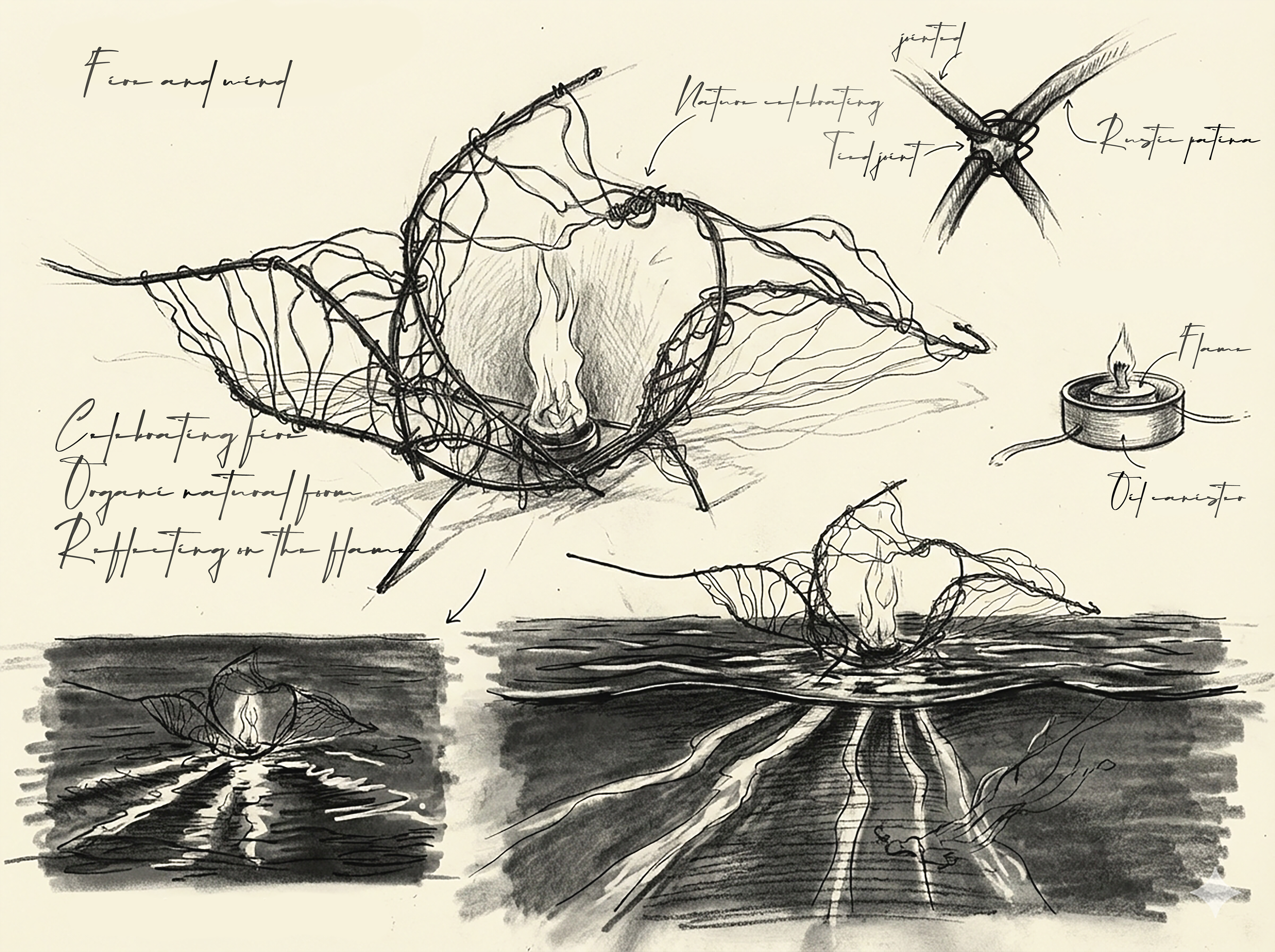
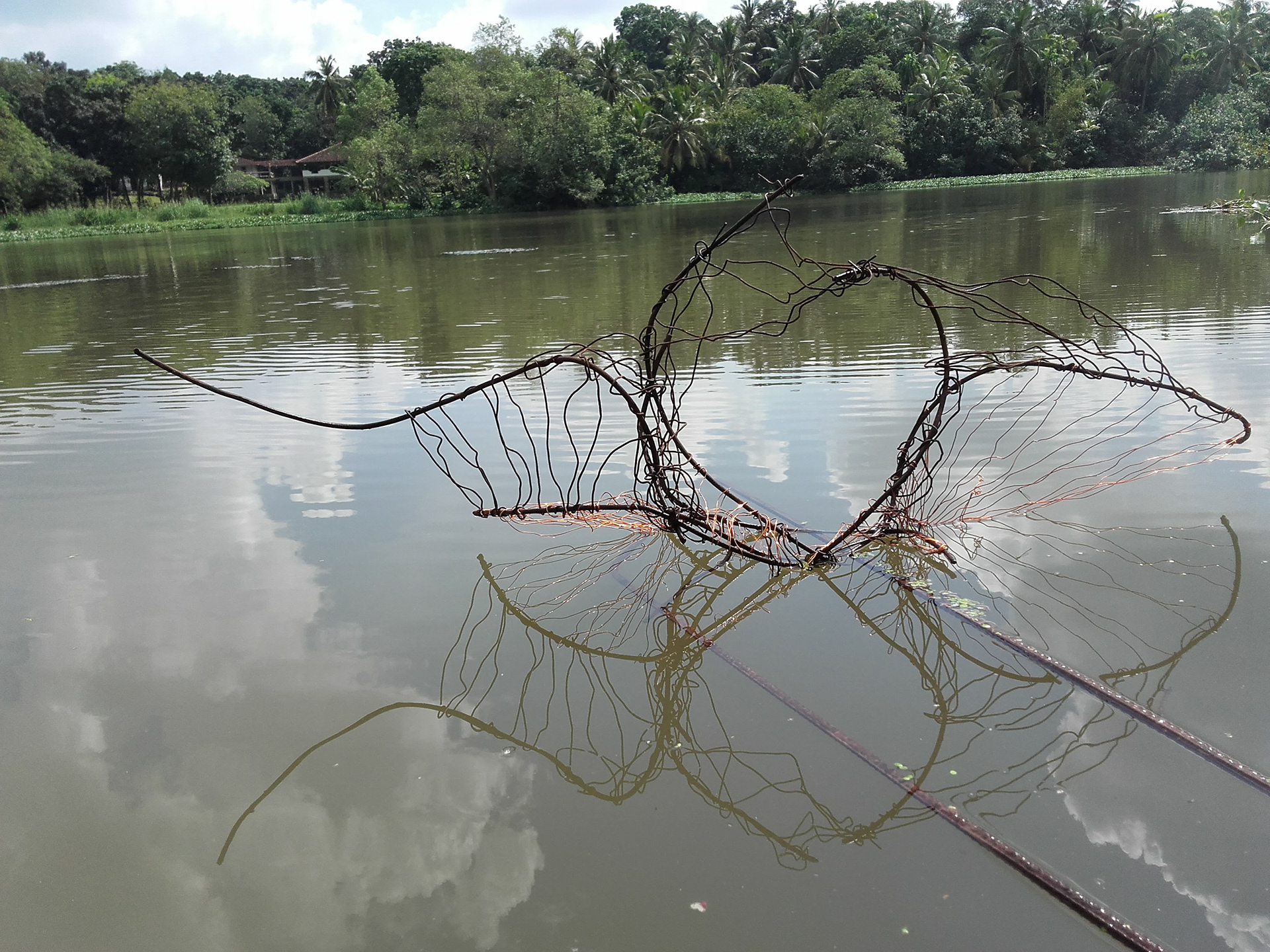
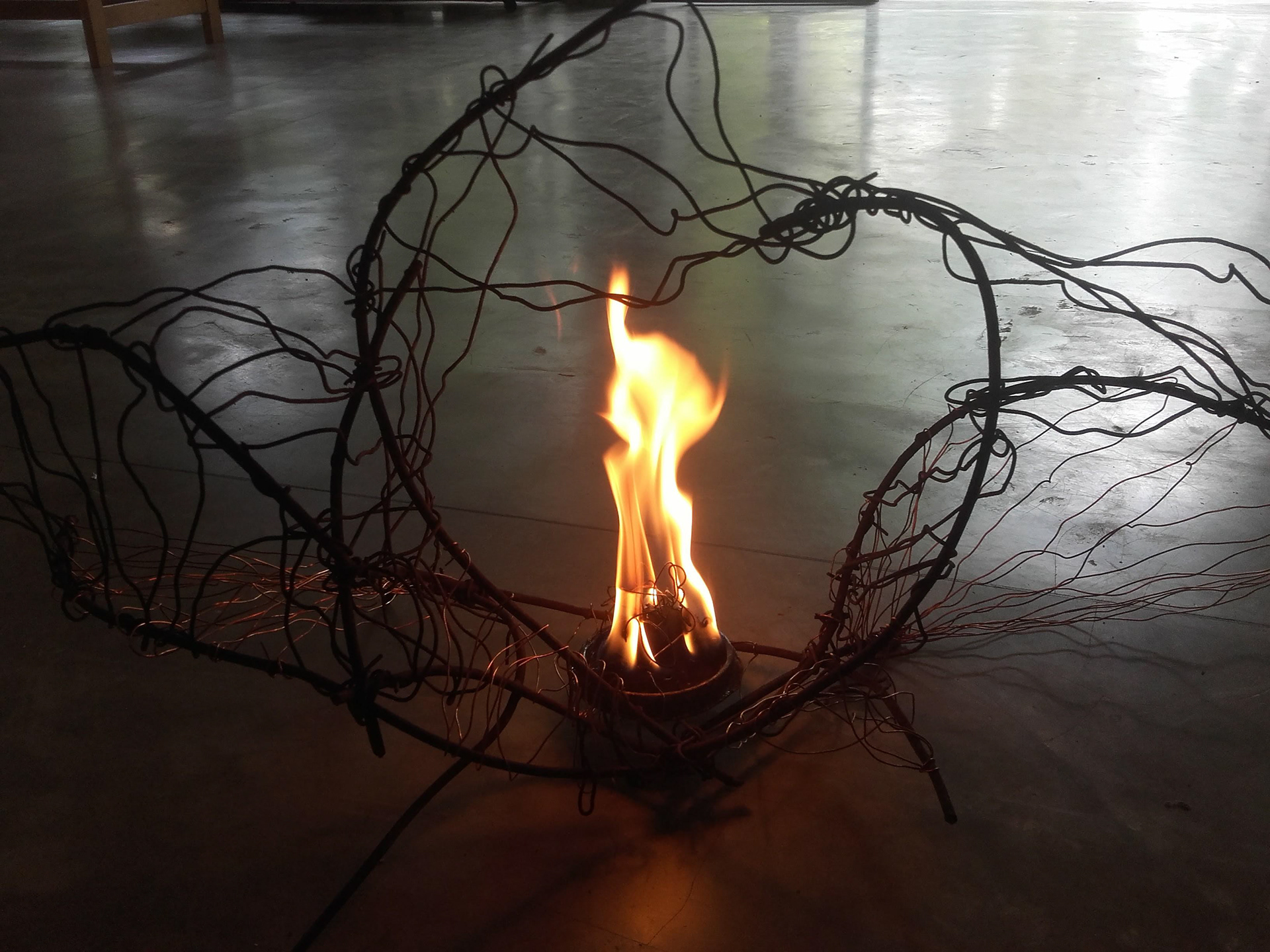
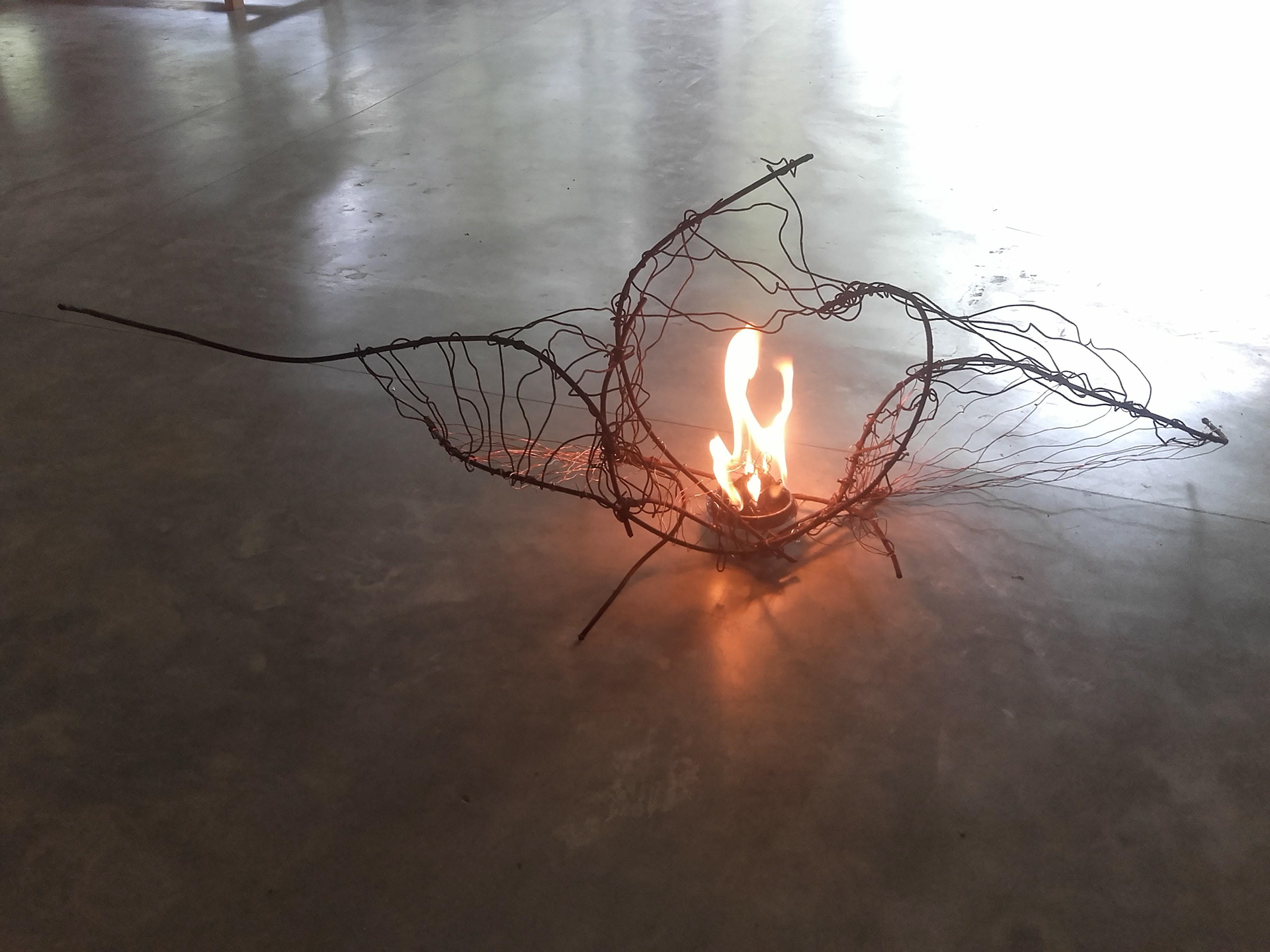
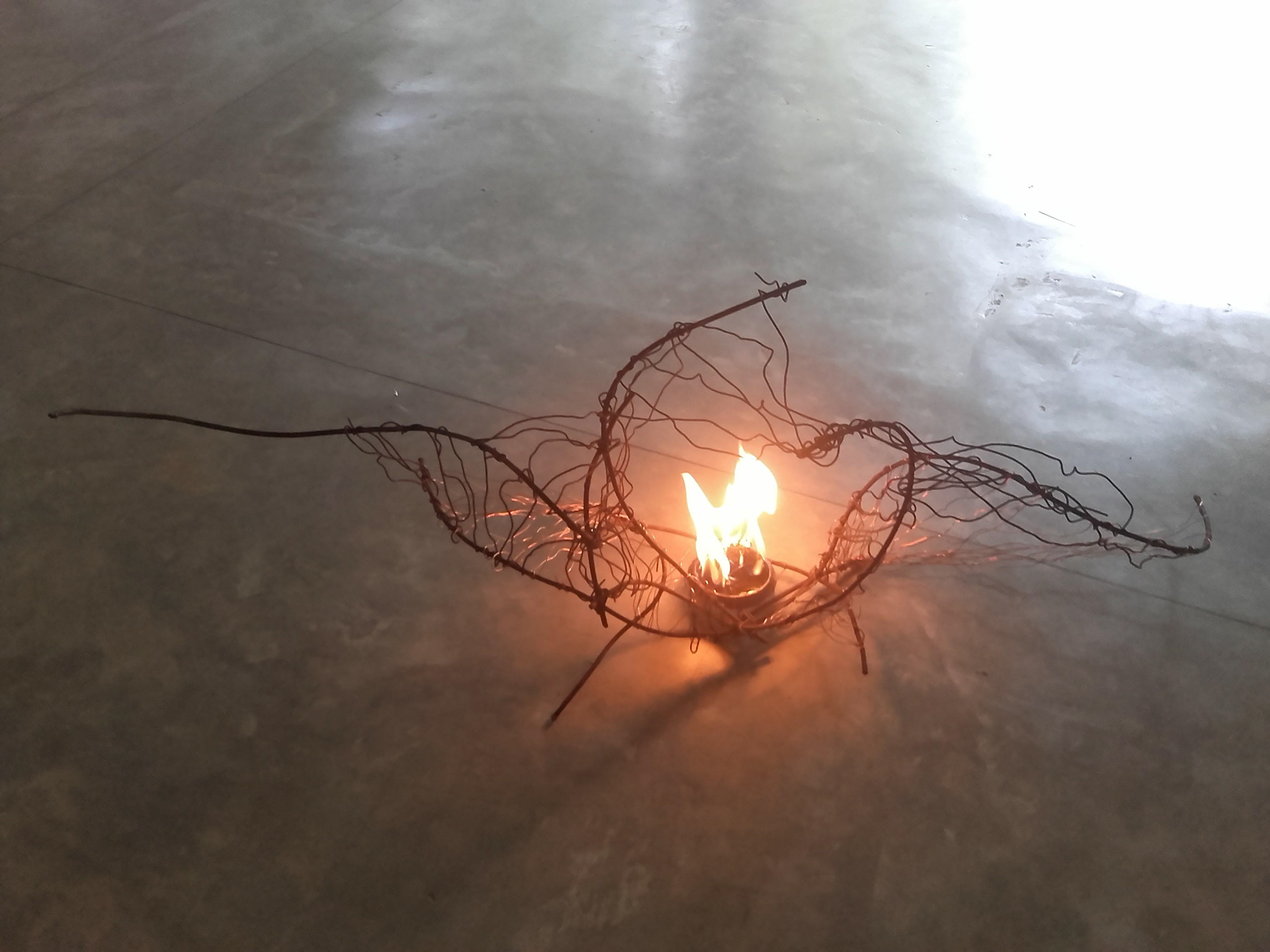
Fire × Wind — Experimental Lantern Study This project began with a simple question: What happens if light is not designed, but allowed to behave naturally? In 2017 as an architecture student, I created this lantern as an exploration of fire and wind as primary lighting elements. Rather than controlling light output, optics, or distribution, the intention was to frame a natural flame and let wind, gravity, and material resistance shape the experience. The entire fixture was crafted from found materials collected from a dump yard, primarily discarded metal wires and rods. The form was developed by hand, inspired directly by the geometry and movement of a flame, with no preliminary drawings. The shape evolved through the process of making. Fire serves as the central light source, while the open wire structure allows wind to continuously interact with the flame. This interaction creates a living light that is never static and never repeatable. A key design decision was placing the lantern near water, as the reflection completes the composition, doubling the presence of the flame and extending the light beyond the object itself. In this moment, light becomes spatial rather than instrumental. This project serves as a reminder that some of the most powerful lighting concepts do not begin with LEDs, calculations, or software, but with observation, restraint, and respect for natural phenomena.